
Today in History - January 9
Arizona Free Press
← Back to
Other Stories
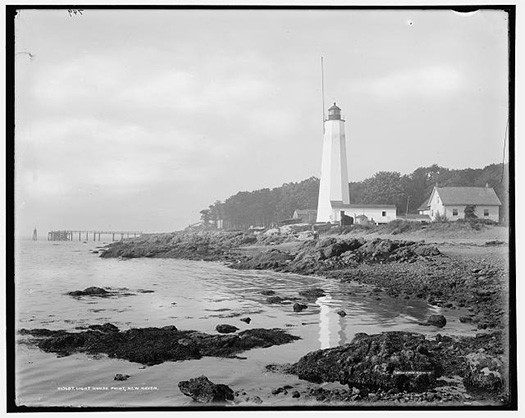
Connecticut suffered under the Articles of Confederation. While paying heavy import duties to New York State, Connecticut found it difficult to discharge its war debts and rebuild its economy. Delegates Oliver Ellsworth, William Samuel Johnson, and Roger Sherman were sent to the Constitutional Convention in Philadelphia with a directive to create a more workable government in accordance with republican principles. As the debate polarized between large and small states over the issue of legislative representation, these men proved invaluable.
Large states advocated representation based on population, while smaller states, such as New Jersey, urged that each state have a single vote. Although protective of Connecticut’s interests as a small state, the Connecticut delegation remained flexible and lobbied for the “Connecticut Compromise.” It created the current legislative framework of an upper house based on equal representation, the Senate, and a lower house based on proportional representation, the House of Representatives.
After finishing their work at the Convention on September 17, 1787, the delegates returned to Connecticut. With Federalists firmly in control of the convention, Oliver Ellsworth opened the debates by reminding fellow citizens of Connecticut’s disadvantage under the Articles of Confederation:
Our being tributaries to our sister states is in consequence of the want of a federal system. The state of New York raises 60 or £80,000 a year by impost. Connecticut consumes about one third of the goods upon which this impost is laid, and consequently pays one third of this sum to New York. If we import by the medium of Massachusetts, she has an impost, and to her we pay a tribute. If this is done when we have the shadow of a national government, what shall we not suffer when even that shadow is gone!
Speech of Oliver Ellsworth. Fragment of the Debates In the Convention of the State of Connecticut, January 4, 1788. Elliot’s Debates, Vol.II, p. 189. A Century of Lawmaking for a New Nation: U.S. Congressional Documents and Debates, 1774-1875
Ellsworth’s position prevailed. Connecticut’s ratifying convention approved the Constitution by an overwhelming majority less than a week after Ellsworth’s speech.